
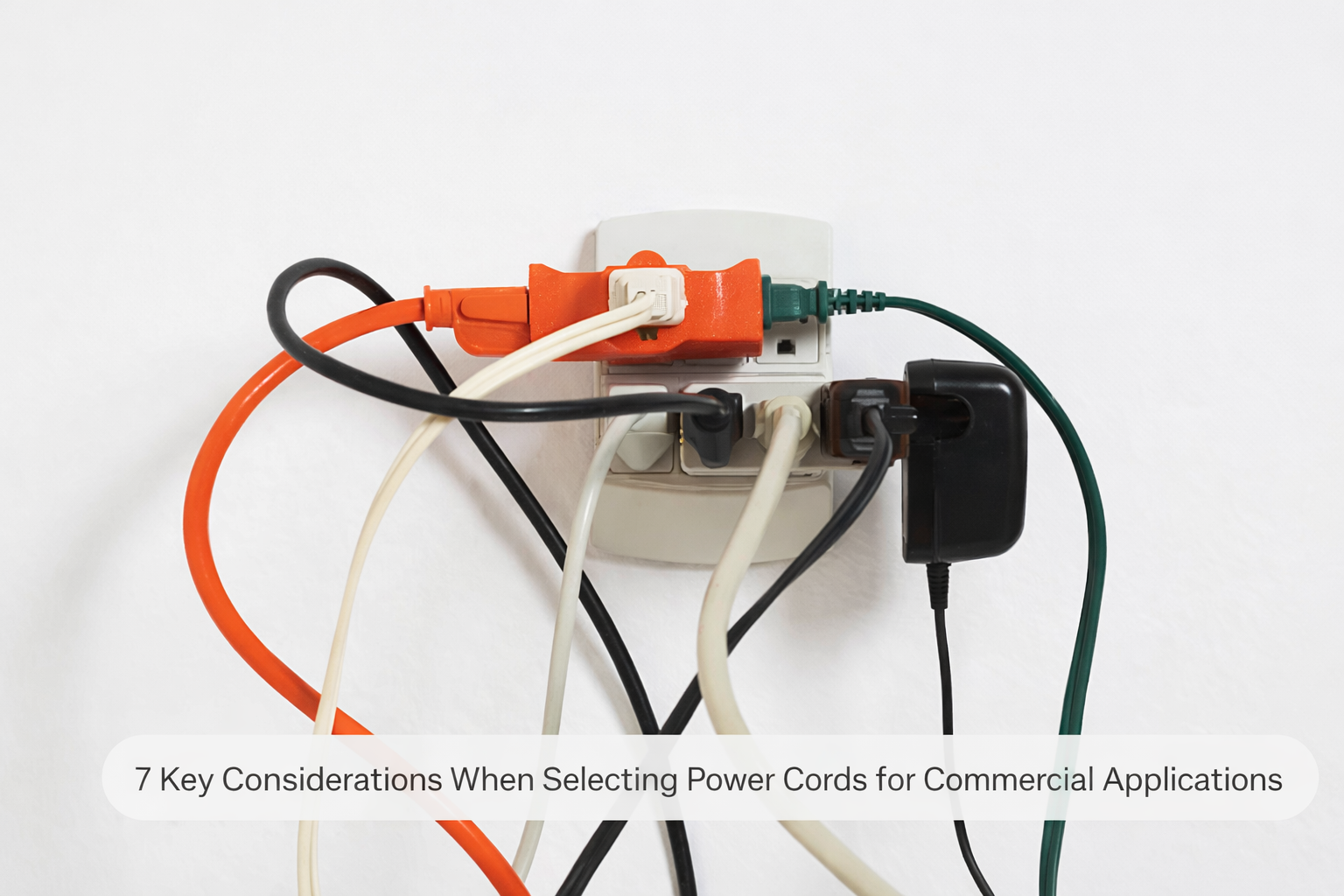
Power cords and extension cords, Americord are ubiquitous in commercial environments, yet they are often taken for granted. The type of power cord you use can make a significant difference in safety, efficiency, and long-term operating costs, whether you are in an office, a retail area, or a busy warehouse.
Get the wrong one, and the consequences will pile up very quickly. Inadequate or unsuitable cords may overheat, damage equipment, pose compliance challenges, or even pose serious occupational risks. This is why getting it right the first time is more essential than many businesses realize.
This guide discusses seven considerations for choosing power cords for commercial use, helping you make innovative, compliant, and future-proof decisions with confidence.
1. Choose Commercial-Grade Power Cords First
One of the most significant errors made in the business world is using residential power cords simply because they are readily available or seem affordable. While residential cords can be used in the short term or for light-duty applications, they are not designed to support continuous electrical or load use, repeated movement, or higher usage frequency common in commercial situations.
Commercial and industrial power cords are constructed with conductors made of heavier copper, thicker insulation, and reinforced strain relief at joints. These characteristics can help prevent internal wire breakage, overheating, and premature failure. Equipment in offices, retail areas, workshops, and industrial areas may be required to operate for extended periods; hence, durability and heat resistance are paramount.
In such settings, residential cords lead to increased downtime and higher long-term replacement costs. Using commercial-grade power cords will guarantee a safe power system, increased lifespan, and reliable performance across all business activities.
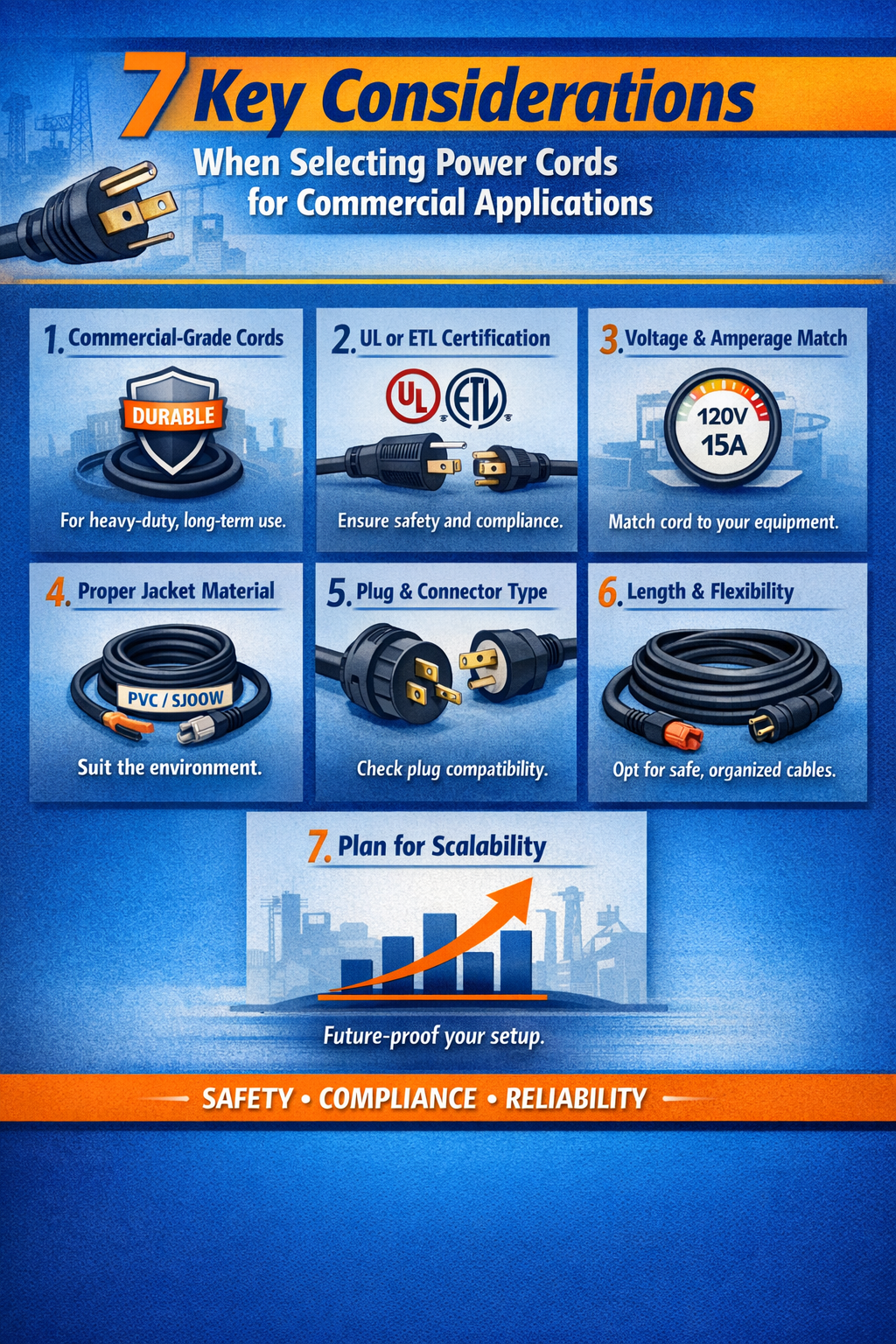
2. Verify UL or ETL Certification for Safety Compliance
When choosing power or extension cords for business use, safety certification must never be compromised. The electrical and mechanical integrity of UL-certified cords or ETL-certified alternatives has been tested to comply with safety standards established by nations to ensure their safety.
These certifications ensure the cords are safe enough to handle rated voltage and amperage, do not accumulate heat, are insulated, and are grounded. Uncertified cords pose a significant risk of electrical fires, shocks, and damage to equipment used in a commercial setting.
OSHA electrical safety standards also outline the use of acceptable electrical equipment to reduce workplace hazards and ensure compliance. In addition to safety, certified cords can help businesses avoid failing inspections, insurance hassles, and lawsuits.
The decision to use certified power cords is a basic yet vital step towards more acceptable, safer operations.
3. Match Voltage, Amperage, and Load Requirements Exactly
All power cords are designed to meet specific electrical specifications. Using a cord beyond its voltage or amperage rating may cause excessive heat buildup, insulation failure, or damage to internal conductors. This is among the most frequent and expensive errors in business electrical installations.
Before selecting a cord, businesses should ensure they understand the equipment’s voltage requirements, the equipment’s amperage draw, and the overall load if several devices are connected. Higher-power equipment may require heavy-duty extension cables by Americord with thicker conductors, which have lower AWG (American Wire Gauge) numbers.
Correct matching of electrical ratings helps ensure consistent operation, safeguards in-use equipment, and minimizes the risk of power-related failures. Correct load matching also extends cord life and facilitates daily activities.
4. Ensure Plug and Connector Compatibility
Commercial equipment is usually wired with specialized plugs and receptacles, so you can’t assume compatibility. The wrong plug can cause loose connections, unsafe adapters, and insufficient grounding.
If you are purchasing power or extension cords by Americord, make sure they are NEMA plug type and have a lock or non-lock connector. Commercial-grade plugs feature a rugged grip for long-lasting connections in the home, office, work sites, and more.
Well-fitting plugs will reduce the risk of accidental disconnection, electrical mismatches, and even electrical arcing! It also ensures that cords are suitable for use with the current electrical systems without compromising safety.
5. Choose the Appropriate Jacket Material for the Environment
The conditions for using a power cord directly affect its lifespan and safety. Cords used for commercial purposes can be exposed to heat, moisture, oils, or chemicals, which can damage the cord, or it may result in a potential tripping hazard due to external abrasion and foot traffic, especially in warehouse aisles, kitchens, and manufacturing areas.
Various types of jackets are meant for different situations. PVC jackets by Americord are frequently specified for general indoor applications, while rubber jackets (such as SJOOW and SOOW) offer greater flexibility and oil/abrasion resistance. Thermoplastic elastomer (TPE) provides the strength and resilience in high-traffic or semi-industrial environments.
Environmental suitability is often ignored, but it plays an integral role in long-term performance and safety.
6. Prioritize Flexibility, Length, and Cable Management
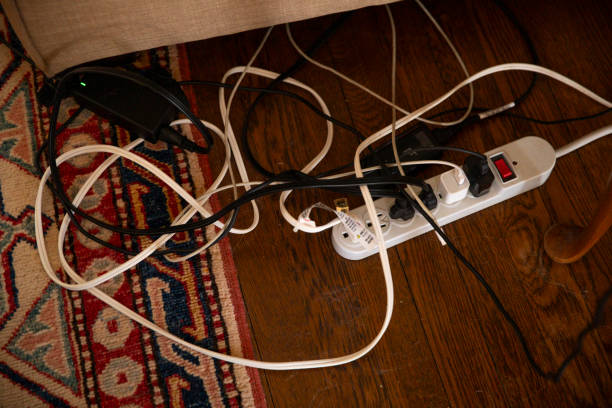
The flexibility and length of cords contribute to safety more than many companies realize. Excessively long cords can be cumbersome, and excessively short cords can overstretch and wear out outlets or connectors.
To ensure cords are routed safely and neatly, choose the right length and a flexible insulation material. Organized cable routes enhance the workplace’s physical appearance and follow recommended cord safety tips to minimize the risk of accidents and ensure compliance with integrity standards.
Good cable management also facilitates easier maintenance, enhances air circulation around equipment, and reduces unnecessary stress on connectors, thereby extending the life of the wire.
7. Plan for Scalability and Long-Term Use
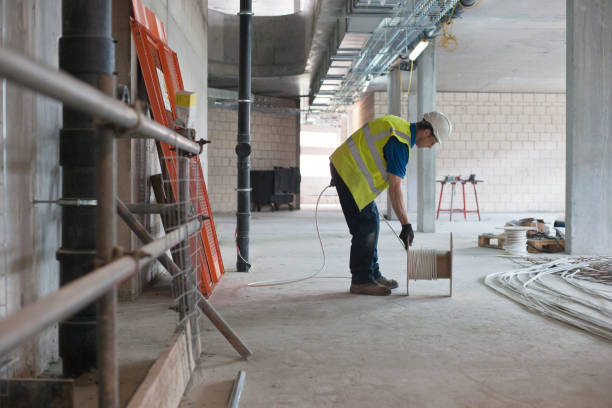
Commercial power requirements are hardly constant. Electrical requirements escalate as businesses grow, bring in new equipment, or reorganize working areas. Scalability planning prevents the need to regularly change the cords and upgrade the system at the last minute.
High-quality commercial power cords are an investment that can be used in the long run, are cost-efficient to maintain, and allow for future adjustments. Long-lasting cords would be more appropriate for meeting changing power demands and accommodating new equipment without sacrificing safety.
Industrial experts consistently cite long-term durability as a fundamental factor in selecting commercial electrical components. Thinking ahead ensures that today’s choices continue to support tomorrow’s operations.
The Correct Power Cord is a Business Investment
Selecting appropriate commercial power cords is not just a matter of plug-and-play; it also involves safety, compliance, efficiency, and comfort. The UL certification, load capacity, jacketing material choice, and plug compatibility are the elements that must be considered to save your business.
To achieve the best performance and reliability, consider an Americord power cord designed explicitly for current commercial requirements.
Modernize your power system and have your business powered, secured, and ready.