The kitchen is where we start our mornings and begin to wind down in the evenings. It’s a space shaped by colour, texture and light; a place where design reflects how we live and who we are.
Design that reflects your style
Good kitchen design starts with a sense of self, whether you’re more drawn to calm earthy palettes or vibrant colours. Kitchens painted in soft blues, sage greens, or warm neutral hues can feel grounding; deeper tones like navy and charcoal can bring a sense of confidence.
Layout, material and detail all speak to personality too. An open plan space makes it easy for family and guests to gather and feel at home together. Lighting choices can help create ambience after dark; a range of textures, from matte cabinetry to warm woods, echo your tastes; and hardware choices, whether brushed brass or minimalist steel, add some more nuance.
Together these design choices help create a space that feels personal because it’s tailored to who you are and how you live.
Personality in colour and material
Colour is one of the best ways to infuse personality into a kitchen. What you choose influences how the space feels every day. Greens and earthy hues often evoke calm and imply a connection to nature; cosy neutrals invite warmth; and bold tones tend to bring more energy.
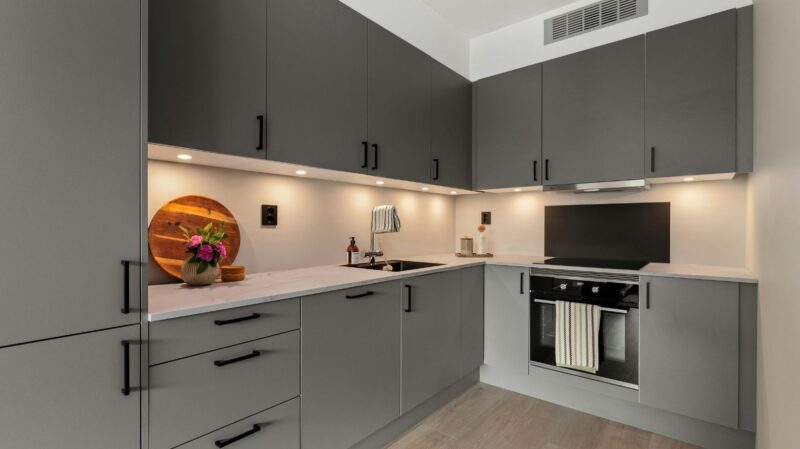
Cabinet colours help set the tone. A kitchen with more neutral cabinetry paired with natural oak floors might bring a feeling of peace you’re looking for. Pair these with subtle metallic accents and you’ll have a space that feels both modern and homely.
Textures add feeling too. Stone and glossy tiles can add contrast and reflect light. These touches bring some personality without needing loud statements.
Rituals that shape how we experience our kitchens
Beyond design choices, the rituals we build around our kitchens shape how they feel. It can be as simple as a Sunday morning coffee at the counter or a weekly baking session with family.
Families often enjoy food-centred traditions that bring ritual into the kitchen. For example, many Jewish families use special honey dishes, available from online stores such as Nadav Art, for Rosh Hashanah, the Jewish New Year. Apples and challah are dipped in honey for a sweet new year. These kinds of objects and practices enrich a home and make it feel more than just functional.
Practicality
A great design considers how you move through your day. Your natural routines might mean you have to make sure the fridge or freezer isn’t too close to a prep zone. You might prefer being able to see out the window while you wash up. Seating can be changed to encourage more conversation. These aren’t stylistic details so much as functional ones; they support your long-term enjoyment of the kitchen beyond the novelty of a new design.
Design that looks beautiful but doesn’t serve how you live will never feel quite right. Worktops and fixtures should work well every day. Robust surfaces (engineered stone or porcelain slabs, for example) make cooking feel relaxed and not too precious. Deeper sinks and well designed tapware allow washing to be a quick task.
Making it your own
Whether you’re planning a full remodel or just refining one corner of your current kitchen, start with how you want to feel there. Take cues from colour psychology, but let your choices be guided by your own routines and preferences. Build rituals that bring joy, and let your favourite objects be part of the story. The result will be a kitchen that looks good, works well and feels like yours.