Does this sound familiar? Someone tries to set up a movie outside, the screen’s hard to see, the sound’s off, and halfway through people are just talking instead of watching.
It sounds simple, but a good setup makes a bigger difference than people expect. A few small things—where the screen goes, how bright the projector is, how you handle sound—basically decide whether it works or not.
Once you get those right, it’s actually pretty easy to pull off.
Start With the Screen
Where you put the screen matters more than anything else.
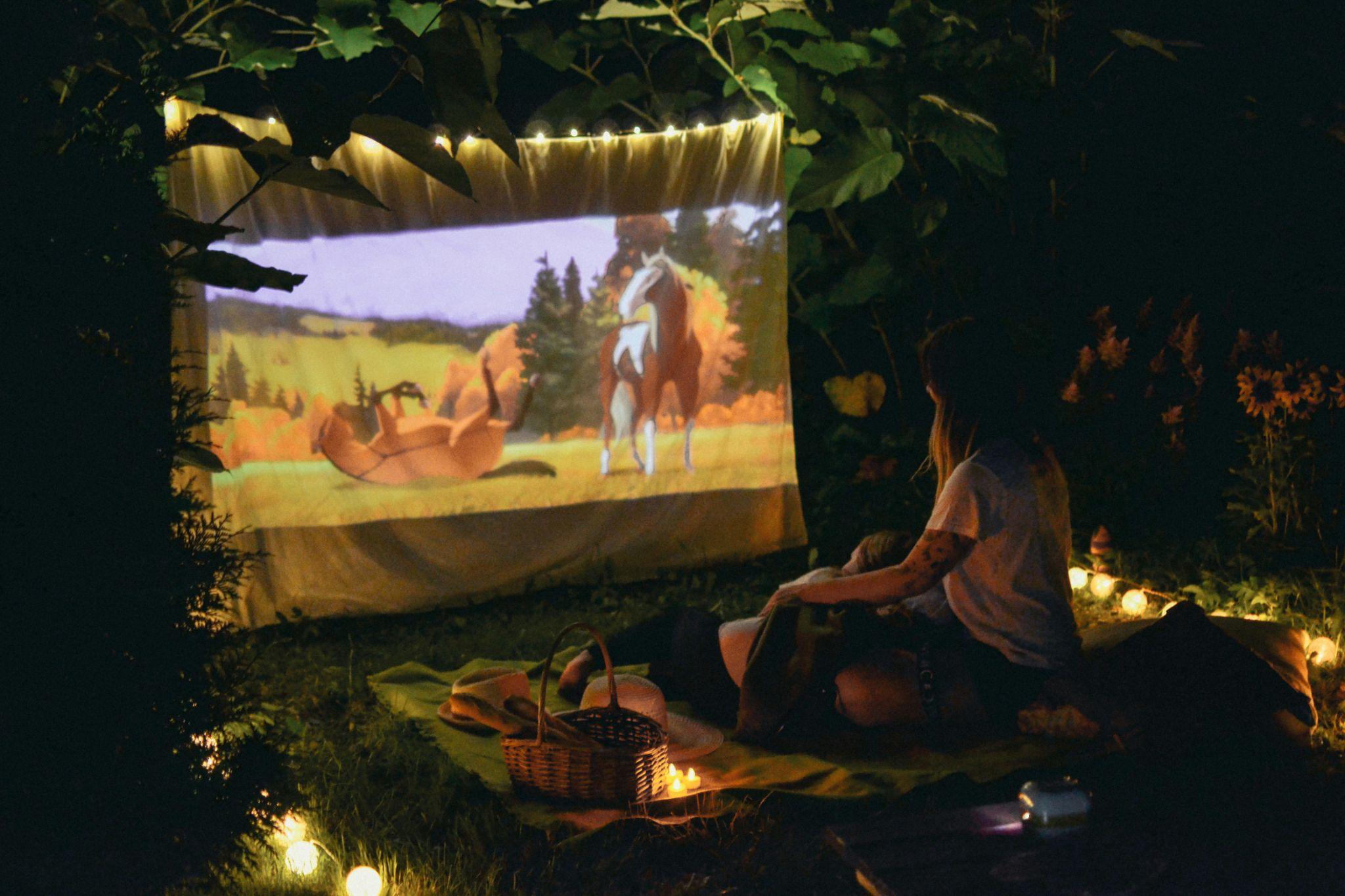
If there’s light hitting it—even a little—it’s going to look washed out. So try to face it away from house lights or streetlights. A blank wall can work, but a real screen does make a difference if you have one, and it’s usually one of the first things an AV crew will dial in to get the picture right.
Also don’t hang it too low. People in the back won’t see. But too high feels weird too.
Somewhere in the middle, eye level when seated, usually works.
The Projector Is Where Most People Mess Up
A lot of people just grab whatever projector they find and hope for the best.
Brightness matters way more than you think. If it’s not fully dark, you’re going to want something in that 2,500–3,000 lumen range at least. Otherwise it just looks dull.
It doesn’t have to be expensive. Just don’t go too cheap here or it kind of ruins the whole thing.
Sound Without Annoying Everyone
The built-in speaker on a projector is almost never enough.
For a small group enjoying casual, everyday activities like a movie, a Bluetooth speaker is fine. Once you have more people, though, it starts getting uneven—loud in one spot, quiet in another.
Placing speakers off to the side or slightly behind where people are sitting helps. It spreads things out without blasting your neighbors.
Power Is The Part People Forget
This is usually where things get messy.
You’ve got cords running everywhere, people stepping over them, something comes unplugged in the middle of the movie. Not ideal.
Use outdoor extension cords if you can, and try to keep them out of the main walking path. Even just taping them down helps.
Seating That Actually Works
You don’t need anything fancy, but you do need to think about it a little.
If everyone’s sitting at the same level, someone’s going to be blocked. Easiest fix is just mixing it up—blankets up front, chairs in the back.
Even a small difference in height makes it way easier to see.
If you have a homestead shed, for example, you might consider attaching a projector screen to it. It’s height should offer plenty of visibility for everyone no matter where they sit.
The Best Lighting
You still need some light at night so people aren’t tripping over things, just not much.
String lights work, or even small ground lights along a path. Just keep them away from the screen or it’ll mess with the picture.
Have a Backup Plan
Something always comes up. Wind, bugs, random rain—the works.
Even just having a covered area you can move things to help. At least know how fast you can pack everything up if you need to.
When It Starts Getting Complicated
If it’s just a few people, you can keep this pretty simple.
But once you start thinking bigger—more people, bigger screen, better sound—it gets harder to balance everything. That’s usually where bringing in a professional starts to make sense, especially if you don’t want to deal with setup during the event.
The Best Movie Night Is Easier Than You Think
It doesn’t need to be perfect.
If people can see the screen, hear what’s going on, and sit comfortably, it works. Everything else is just extra. What matters is having fun and creating a space for everyone to enjoy and relax.
If you enjoyed reading about simple ways to upgrade your space and want more practical ideas like this, check out more content on our site.