Most boardroom AI talks focus on tools, budgets, and risk. But there’s a simpler question underneath: how should AI work with the human judgment that makes the final call? Many organizations now work with AI consulting services to link models with their human teams, even as they decide what should stay in human hands. Handled well, these services help leaders treat artificial systems and human brains as parts of one careful design, rather than as rivals.
The scale of adoption makes this design problem hard to ignore. 88% of organizations use AI in at least one area, but only about a third have scaled it past pilots into real daily work. Many leaders see the same gap: the models look good, the tests look good, but teams and workflows don’t change fast enough. This is where steady outside support and strong human judgment matter.
What artificial systems actually do well
Artificial intelligence mainly finds patterns in data. With enough examples, it can spot trends people miss, predict what comes next, and summarize lots of text fast. In business, that means practical jobs like forecasting demand, sorting support tickets, pulling key details from contracts, or suggesting the next best sales step.
Models are good at repetitive work. An invoice-checking model does not get tired or lose focus. With proper logging and controls, it follows the same rules every time. That consistency can cut errors in routine tasks and leave people to handle the tricky cases, trade-offs, and negotiations.
But models still don’t truly understand what they produce. A model can write a medical note without any real sense of risk or context. It can write code that passes tests but creates a security hole. Without human review and clear rules for when a second check is required, small mistakes can build up over time. Many AI programs stall after pilots because teams underestimate how much human judgment is still needed around the model.
What biological intelligence computers still do better
The human brain is slow in clock speed terms, yet extraordinary in context and transfer. A product manager can sit in a client meeting, read the room, remember three previous projects, and adjust the plan on the fly. No general-purpose model can yet match that mix of experience, social signaling, and ethical concern.
Research on the future of work backs this up. Employers expect the strongest demand growth in skills such as analytical thinking, creativity, and social influence, alongside AI literacy and data skills. These skills describe biological intelligence in action: people who can hold conflicting signals, ask better questions of models, and decide when not to follow an automated recommendation.
Biological intelligence computers also shine at meaning making. Data on its own is just variation; it becomes insight only when someone links it to a story about customers, costs, or risk. A compliance officer can hear a model’s suggestion, recall a regulator’s comment from years earlier, and decide that the short-term win is not worth the future argument. That kind of cautious, context-rich thinking is hard to formalize, yet it is exactly what keeps AI projects aligned with long-term strategy.
The rise of literal biological computing
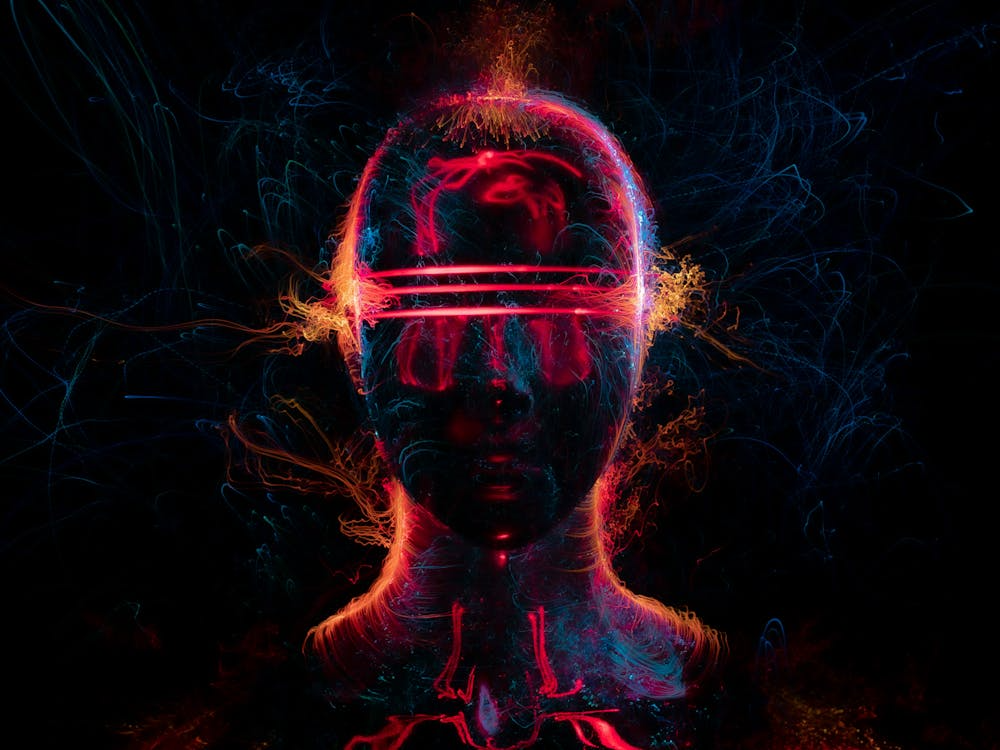
There’s another angle here: “biological intelligence” is not just a metaphor anymore. Researchers are experimenting with tiny biological computing systems, where lab-grown neurons connect to electronics. A 2025 review says this “organoid intelligence” could help with pattern recognition and complex simulations, and it may use less energy for some tasks. But it also raises serious ethical issues, and some types of work might one day run better on these systems than on regular chips.
These systems are still experimental and stay in labs, so businesses are not buying them. Still, the idea matters because it shows how wide the options are becoming. Work will be shared across software, AI models, people, and maybe biohybrid hardware later. The key question is not “which intelligence is best,” but “which one fits this job.”
That’s where careful AI consulting helps. Providers like N-iX already work on setups where models, rules, and human reviewers must fit into one clear workflow. Similar discipline will matter as new hardware, like neuromorphic chips and early biological computing prototypes, starts showing up in real pilots.
Designing systems where artificial and biological intelligence cooperate
Strong AI programs treat human judgment as a first-class design constraint, not an afterthought. Instead of asking “what can the model do,” leading teams ask “what should the model do, and when should a human step in.” AI consulting services can support this shift by helping leaders map decisions, classify risk, and define where biological intelligence must stay firmly in the loop.
A simple design checklist can help:
- Start from one clear decision, such as approving a loan or routing a support ticket.
- List the data the model will see and where human context is needed.
- Decide where the model suggests options and where it only ranks, so staff keep responsibility for sensitive calls.
- Set thresholds for review and simple rules for when people can override a model.
- Plan training so staff clearly know what the model is good at, what it is poor at, and how to raise concerns.
For many organizations, partners like N-iX join at this stage to set up the basics: clean data flow, clear review steps, and clear ownership. They don’t just plug in a generic model. That process design matters as much as the model’s performance.
Conclusion
Artificial and biological intelligence are not enemies. Artificial systems handle scale and pattern recognition. Biological intelligence holds context and long-term responsibility. Organizations that use AI consulting services to design respectful partnerships between the two, instead of pushing people out of the loop, are more likely to see gains that truly last.