
In the current housing landscape, significant affordability and supply constraints are compelling many people to seek innovative living solutions. The ongoing housing supply crunch has highlighted the need for new construction and accelerated the shift toward alternative housing. This movement is no longer a niche trend but a practical response to the modern homeowner’s priorities: sustainability, financial freedom, and unique design. From repurposed industrial materials to mobile minimalist dwellings, these options represent a fundamental reimagining of what a home can be.
While the appeal of non-traditional homes is strong, the path to ownership can be complex and filled with unique hurdles. As many prospective buyers discover, navigating specific zoning regulations, securing financing from hesitant lenders, and understanding the distinct lifestyle adjustments required can be overwhelming. Each alternative dwelling type has rules and considerations that differ significantly from a conventional home purchase, making thorough research an essential first step for anyone considering this route.
This comprehensive guide provides clarity and empowers you to make an informed choice for your next home. It will break down the three most popular alternative dwellings: shipping container homes, tiny homes on wheels, and modular prefabs. For each option, this article provides a detailed analysis of the costs, legal considerations, and lifestyle benefits, equipping you with the knowledge to explore this new frontier of homeownership confidently.
Shipping Container Homes: Industrial Strength Meets Modern Design
Shipping container homes transform industrial steel boxes into striking, durable, and highly customizable living spaces. Their raw, modern aesthetic appeals to those who value form and function, offering a unique architectural statement. The growth in this sector is a testament to its increasing acceptance as a viable housing solution, with the global container homes market projected to reach USD 108.7 billion by 2032.
Of course, simply buying a shipping container will not mean you get a home. Having an experienced construction partner would be helpful when you start building your new container-home lifestyle.
The Cost Breakdown
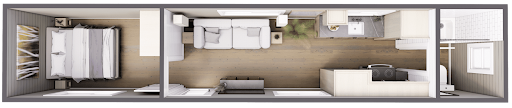
One of the primary drivers behind the popularity of shipping container homes is their financial appeal. On a per-square-foot basis, they are often more affordable than traditional builds, typically costing between $150 and $350 per square foot, compared to $200 to $400 for conventional homes. Several factors influence the final cost, including the number of containers used, the design’s complexity, the finish level when planning your interior renovation, and necessary site preparation costs such as foundation and utility hookups.
Navigating Legal Codes And Permits
The most significant challenge in building a container home lies in navigating local building codes and zoning laws, which vary dramatically by municipality. Structural modifications, insulation, plumbing, and electrical systems must all be brought up to residential standards. This process can be difficult for those unfamiliar with construction regulations. This is why seeking expert guidance from experienced firms is advisable. They are adept at translating a container’s industrial form into a quality, code-compliant residence.
Lifestyle Benefits And Sustainability
Container homes offer a host of unique benefits that appeal to modern buyers. The construction timeline can be significantly shorter, with a basic home possible in a few weeks to a month, compared to several months for a traditional build. Furthermore, the sustainability angle is a powerful motivator. Repurposing a single shipping container saves approximately 8,000 pounds of steel from being scrapped. This commitment to recycling materials resonates with environmentally conscious buyers who also appreciate the raw, modern-industrial aesthetic that defines this unique form of alternative housing.
Tiny Homes on Wheels: Embracing the Minimalist, Mobile Lifestyle
Tiny homes on wheels (THOWs) are at the forefront of a cultural movement prioritizing minimalism, mobility, and financial freedom over square footage. These compact, often custom-built homes are designed for efficiency and simplicity, allowing owners to live with a smaller environmental and financial footprint. This powerful cultural shift is reflected in market projections, with the global tiny homes market expected to grow to USD 123.75 billion by 2032.
Understanding The Investment
The cost of tiny homes can range dramatically, from budget-friendly DIY projects costing as little as $15,000 to high-end, professionally built models exceeding $100,000. However, the primary financial value is a lower initial purchase price and drastically reduced long-term expenses. With minimal to no mortgage, significantly lower utility and property tax bills, and reduced maintenance costs, tiny home living allows owners to allocate their financial resources toward travel, savings, or other life experiences.
Legal Gray Areas And Parking Solutions
The most significant legal hurdle for tiny home owners is finding a legal place to park. Because THOWs are often classified as recreational vehicles (RVs), they are not permitted as permanent residences in many municipalities. This has created a legal gray area that owners must navigate carefully. Common solutions include parking in RV parks, settling in dedicated tiny home communities that are becoming more common, or placing the home on private land where local zoning permits it. Some homeowners opt for foundation-based tiny homes, which are often classified as Accessory Dwelling Units (ADUs) and are subject to different, typically more established, regulations.
The Core Benefits Of Tiny Living
Deciding to live in a tiny home is often driven by a desire for a fundamental lifestyle change. This choice is highlighted by homeowners who proudly share their stylish and efficient spaces. The core benefits are clear and compelling for those seeking a different path to homeownership.
- Financial Freedom: A lower mortgage—or no mortgage at all—coupled with reduced utility bills and fewer expenses related to home maintenance, allows for greater financial flexibility.
- Mobility and Flexibility: The ability to relocate without selling your home offers unparalleled opportunities for travel, career changes, and lifestyle adjustments.
- Reduced Environmental Impact: Lower energy consumption, less material usage in construction, and encouraging a more conscious, less consumerist lifestyle all contribute to a smaller ecological footprint.
- Simplicity and Less Clutter: A minimalist lifestyle that prioritizes experiences over possessions can lead to less stress, more free time, and a greater sense of well-being.
Modular Prefab Homes: Redefining Prefabrication
Modular prefab homes are challenging outdated perceptions of prefabricated housing with their high-quality construction, sophisticated design, and remarkable efficiency. Unlike mobile homes, modular homes are built in sections (or modules) in a climate-controlled factory to the same or higher standards as traditionally built homes. These modules are then transported to the property and assembled on a fixed foundation, resulting in a house often indistinguishable from its site-built counterparts.
Cost-Effectiveness And Timeline
The factory-based construction process of modular prefabs offers significant advantages in terms of both time and money. Building indoors eliminates weather-related delays and allows a more streamlined and efficient assembly line process, which reduces labor costs and material waste. This efficiency is gaining mainstream recognition, with off-site manufacturing methods featured at events like the Innovative Housing Showcase hosted by the U.S. Department of Housing and Urban Development to demonstrate their effectiveness.
Streamlined Legal And Financing Processes
One of the most significant advantages of modular homes over other alternative dwellings is their straightforward legal and financing path. Banks and municipal inspectors treat them similarly to traditional homes because they are designed and built to meet local and state building codes. This removes a major hurdle for buyers, as financing is typically as easy to secure as a conventional mortgage, contrasting the challenges often faced when seeking loans for container homes or THOWs.
A Comparative Look At Alternative Housing
The table below compares the key features of the three main alternative housing types to provide a clear, at-a-glance summary. This comparison positions modular homes as a strong contender that blends many of the benefits of traditional construction with the efficiencies of modern manufacturing.
| Feature | Shipping Container Home | Tiny Home on Wheels (THOW) | Modular Prefab Home |
|---|---|---|---|
| Average Cost per Sq. Ft. | $100 – $400+ | $300 – $500+ | $150 – $300+ |
| Typical Construction Time | 2 – 5 months | 2 – 4 months | 3 – 6 months (incl. site prep) |
| Legal & Zoning Difficulty | High (Varies greatly by location) | High (Often classified as RVs) | Low (Treated like traditional homes) |
| Mobility | Low (Can be relocated with effort) | High (Designed for travel) | None (Permanent foundation) |
| Sustainability Focus | Repurposing industrial materials | Reduced consumption & footprint | Reduced construction waste |
Choosing Your Path To A New Kind Of Homeownership
The growing movement toward alternative housing is a direct and powerful response to a widespread desire for more affordable, sustainable, and personalized living spaces. It reflects a shift in priorities, where housing affordability and environmental responsibility are just as important as aesthetics and location. Whether it’s the industrial appeal of a shipping container home, the mobile freedom of a tiny home, or the streamlined efficiency of a modular prefab, each option offers a compelling alternative to the constraints of traditional homeownership.
The journey to a non-traditional home requires thorough research and planning, but the rewards can be immense. Armed with a clear understanding of the costs, legal landscapes, and lifestyle implications of each dwelling, you are now equipped to explore these innovative housing options with confidence. By aligning your choice with your financial goals, personal values, and vision for the future, you can find a home that is not just a place to live, but a true reflection of the life you want to build.