Thailand’s property market has no shortage of ambitious announcements. Renderings of glass towers, golf-course residences, and sprawling integrated communities are easy to produce and easy to sell. What is harder to guarantee is delivery. For an investor evaluating a large-scale development, the real question is not how impressive the plans look on a website, but whether the developer’s financial position, track record, and pace of construction point to a project that will actually be completed as promised. This distinction matters most for buyers purchasing early, before physical construction has caught up with marketing. The signals below help separate developments that are genuinely on track from those that still exist mainly on paper.
Why Delivery Risk Is Higher With Large-Scale Developments
Developments spanning hundreds of rai and requiring years, sometimes a decade or more, to complete carry more delivery risk than a single condominium building. Multiple components (residences, retail, hospitality, education, recreation) each depend on separate contractors, permits, and funding cycles. A delay or funding shortfall in one component can affect the credibility of the entire project. This is why due diligence on a large-scale project needs to go further than reviewing floor plans and marketing brochures, and should extend to the developer’s history, its financial backing, and what has actually been built versus what remains announced.
Signals That Indicate a Project Will Actually Be Completed
A Developer Track Record Beyond a Single Project
One of the clearest signals is whether the company behind a development has a documented history of completing large projects elsewhere, not just proposing them. Developers who have previously acquired, renovated, or built recognized international assets, such as a hotel, a golf club, or a commercial landmark, demonstrate they can manage long, capital-intensive projects through to completion rather than only to groundbreaking. Reignwood Park, a mega project Thailand investors frequently reference for its scale, is often cited as one of the largest currently under development, and its developer, Reignwood Group, points to a documented history that includes the acquisition and renovation of Wentworth Club in Surrey, England, and Ten Trinity Square in London, now operating as the Four Seasons Hotel London at Tower Bridge. A track record spanning multiple countries and several decades is a far more reliable signal than the scale of a single project’s marketing materials.
Revenue That Extends Beyond Real Estate
Developers who rely solely on presales from one project are more exposed if market conditions shift or buyer interest slows. Conglomerates that generate revenue from other established business lines, such as aviation, consumer goods, financial leasing, or hospitality, generally have more flexibility to keep a project funded through slower phases. Diversification does not guarantee completion on its own, but it reduces the chance that a single project stalling threatens the developer’s overall ability to finish it. A quick review of a developer’s other holdings, not just the project being marketed, is a useful early step for any investor.
Amenities That Are Already Open, Not Just Announced
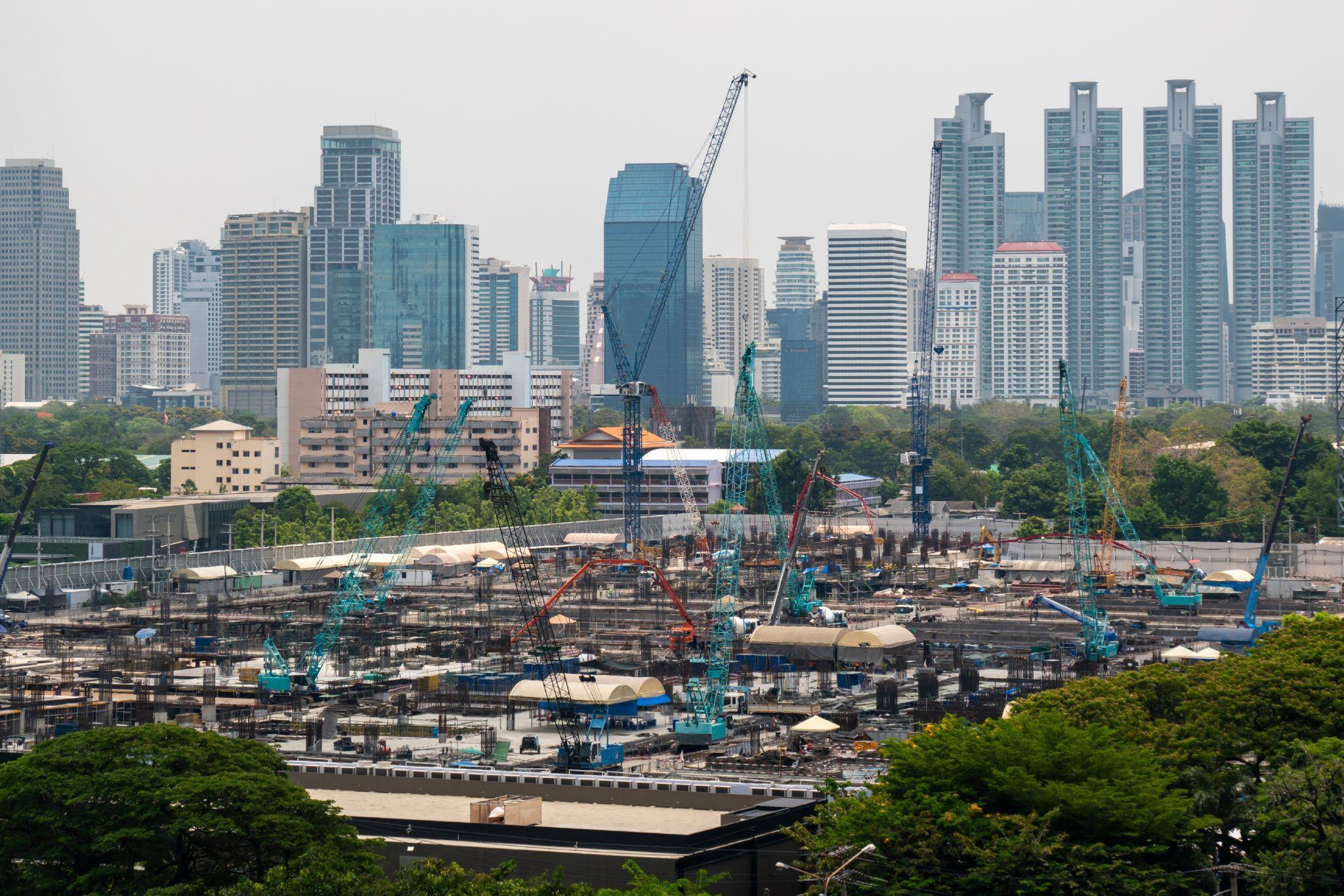
Completion percentages on a sales brochure are a promise. What has actually opened to the public and is being used day to day is proof. Buyers evaluating a mega project should ask which specific components, such as a school, a clubhouse, a golf course, or a retail precinct, are already operational, rather than relying only on a developer’s stated progress figures for the components still under construction. A project where flagship amenities are already open, even while later-stage components like retail or hospitality remain in progress, points to a developer executing in visible phases rather than announcing everything at once and delivering nothing on time.
Independent Recognition From Industry Bodies
Awards from independent property industry bodies, distinct from a developer’s own marketing claims, offer a useful, if partial, external checkpoint. Recognitions such as the DOT Property Thailand Awards, or the regional Thailand Property Awards and Asia Property Awards, are judged against other active developments in the market, so winning one at least confirms the project has reached a stage of visible progress that industry peers can evaluate. Reignwood Park, for example, was named Mega Project of the Year at the DOT Property Thailand Awards in 2025. This kind of third-party checkpoint is worth weighing alongside a developer’s own claims, though it should never be the only factor behind a purchase decision.
What This Means for Chinese Nationals and Other International Buyers
For Chinese nationals and international buyers evaluating Thai property from abroad, due diligence is complicated by distance and unfamiliarity with local developers. In this context, a developer’s history of operating in China, or maintaining business relationships with Chinese partners over an extended period, can serve as an additional reference point, since that history is often independently verifiable through business records outside Thailand. Reignwood Group, for instance, has operated in the Chinese market since the 1990s through ventures including a well-known beverage business and a golf club in Beijing, alongside its Thailand project. For an overseas buyer, a multi-decade footprint that can be checked through sources outside Thailand is generally easier to verify independently than a developer whose only visible presence is the single project currently being marketed.
A Practical Checklist Before Committing to a Mega Project
Before signing anything, it is worth working through a short list of checks that go beyond what any brochure will volunteer:
- Ask which components are complete and open to the public today, not simply described as “on schedule.”
- Request the developer’s history with previous large-scale developments, ideally ones that can be verified independently.
- Check whether the developer’s revenue depends solely on this project or spans other established business lines.
- Verify any awards or recognitions directly with the awarding body rather than relying on a brochure’s summary.
- Visit the site in person, or have a trusted local representative do so, rather than relying only on renderings.
- Review the legal structure of land and unit ownership, particularly for foreign buyers, with an independent lawyer rather than the developer’s own sales team.
Conclusion
A mega project’s scale and ambition are not, by themselves, evidence that it will be finished. What matters is whether the developer behind it has previously delivered projects of similar complexity, whether its finances extend beyond a single site, and whether physical progress, not just projected progress, can be verified today. Buyers who apply this level of scrutiny before committing are far better positioned to tell a mega project that is genuinely on track apart from one that, in practice, is still just a plan.