Assess What’s Eating Your Space
The first thing you want to do, of course, before you spend a single cent is take a proper stock of what’s going on. Measure your floor space, take note of where the door swings into the room, and the minimum clearances needed around each fixture. The toilet should have 1,200 mm by 900 mm minimum clearances from the front edge of the toilet pan, and in a sanitary compartment the minimum clear distance between finished opposite wall surfaces either side of the toilet is 900 mm. If these clearances aren’t available, you’ve found the culprit.
The swing of the bathroom door is often the biggest problem. If you have a door that swings into a 1,500 mm wide bathroom, you can eliminate 700 mm of floor space in just one door swing.
Next to door swings are vanity sizing. There is absolutely no point having a 900 mm vanity in a bathroom that would probably work with a 600 mm unit.
Once you know where space has been lost, the obvious next move is to recover it — and, in a bathroom, the quickest way to do this is to recover some storage space.
Smart Storage Solutions for Small Bathrooms
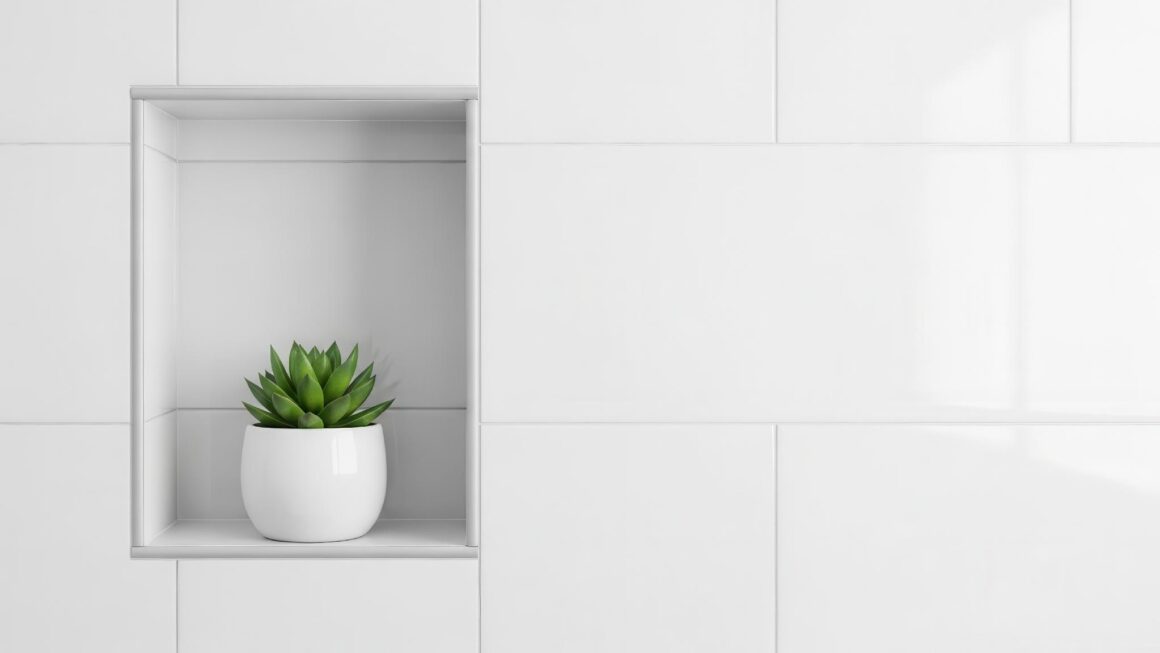
My first preference, every single time, would be a niche in the wall. A standard depth niche is 90–100 mm deep in timber framing and is tiled over to make it even with the wall surface.
Over-toilet shelving solutions are also a possibility that don’t require any structural change. You can pair this up with a storage organiser on the door back for toiletries, and you can recover some real storage space in the bathroom.
I would also add that if your bathroom does have a lot of recessed items, you want to make sure you get a minimum of 25 L/s through your bathroom ventilation system. Once you have sorted storage, your next move is to look at the size of the actual fixtures, because a good storage system won’t compensate for the wrong toilet size or a shower screen that swings into the bathroom.
Choose the Right Fixtures and Fittings
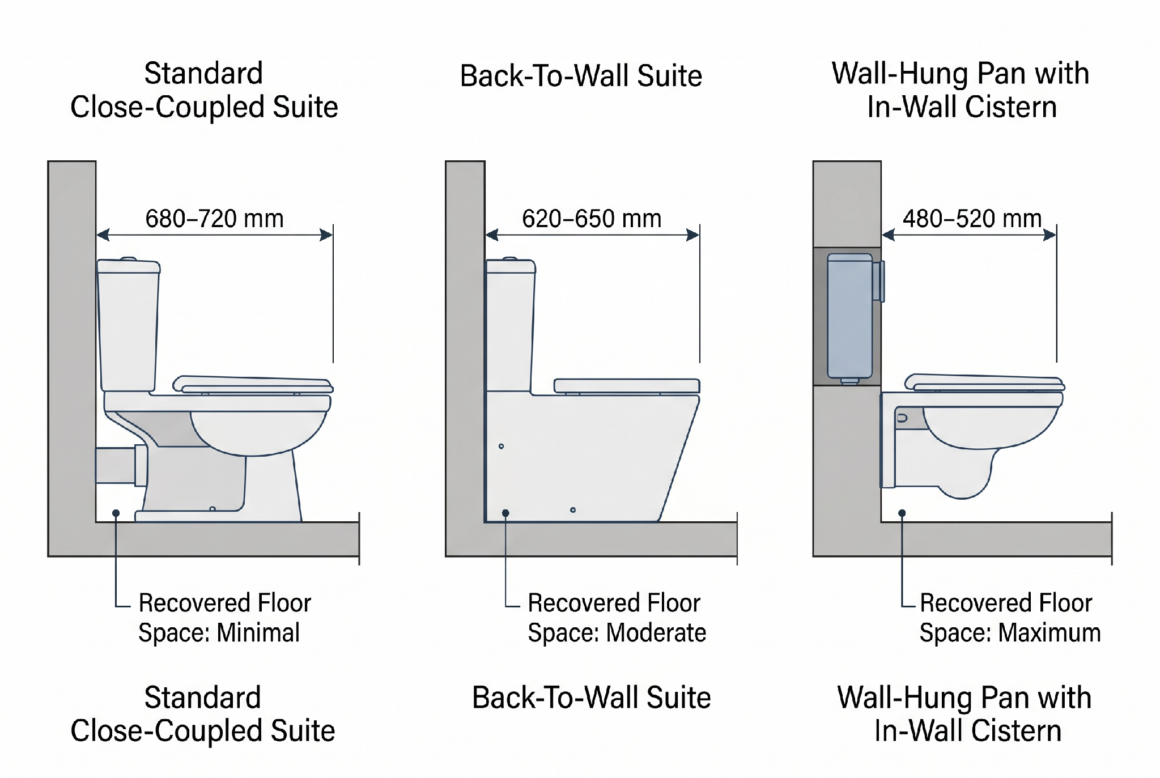
The projection of a bathroom fitting matters far more than most people think. A standard close-coupled suite will project out from the wall by between 680–720 mm. A back-to-wall suite will project less, at about 620–650 mm, and a wall-hung pan with your plumber installing an in-wall cistern will reduce this projection to 480–520 mm. That is actual recovered floor depth of 150–200 mm. Wall-hung pans with in-wall cisterns, it is not the most budget-friendly option, but the recovered floor space is real.
For the shower itself, a frameless walk-in screen is worth considering because it removes the need for a swing door entirely, freeing up valuable floor area. For floor tiles, aim for a finish rated P3 or higher for wet areas.
Selecting compact fixtures is only part of the puzzle. Positioning and placement can make a bigger difference to how spacious a bathroom feels.
Layout Strategies That Open Up the Room
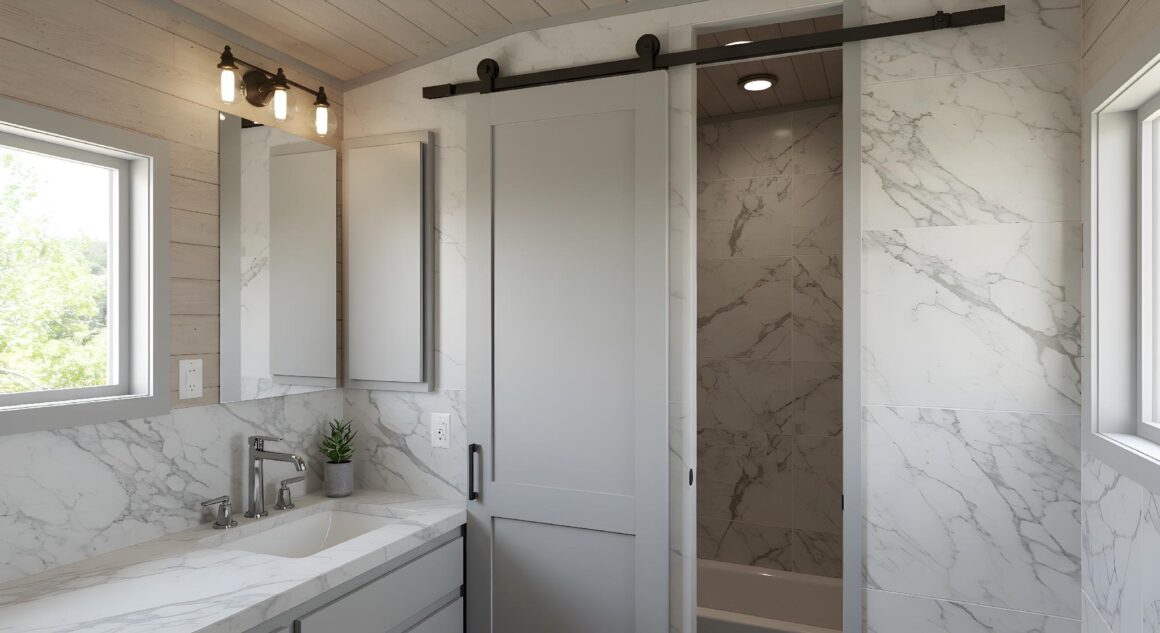
A pocket door is one of the best changes you can make in a small bathroom layout. A standard hinged door requires around 900 mm of swing clearance. Pocket doors slide into a cavity within the wall, recovering that floor space entirely. Barn-style doors slide across the face of the wall. Both styles require a minimum rough opening clear width of 820 mm.
Note that standard 90 mm stud walls are generally too narrow for a pocket door cavity — a minimum cavity width of 120 mm is recommended, which typically means building out the wall slightly.
A wet-room shower layout generally requires less floor space because the bathroom floor itself becomes the shower zone, rather than building a separate alcove. However, the entire wet area must be fully waterproofed, and that includes strict height requirements for the walls. Shower wall waterproofing must extend to a minimum height of 1,800 mm above the floor substrate. This work must be completed by a licensed waterproofer.
After your layout is determined, look carefully at your vanity — it is usually the largest item in a small bathroom and the one most likely to consume or recover usable floor space.
Small Bathroom Vanity and Cabinet Ideas
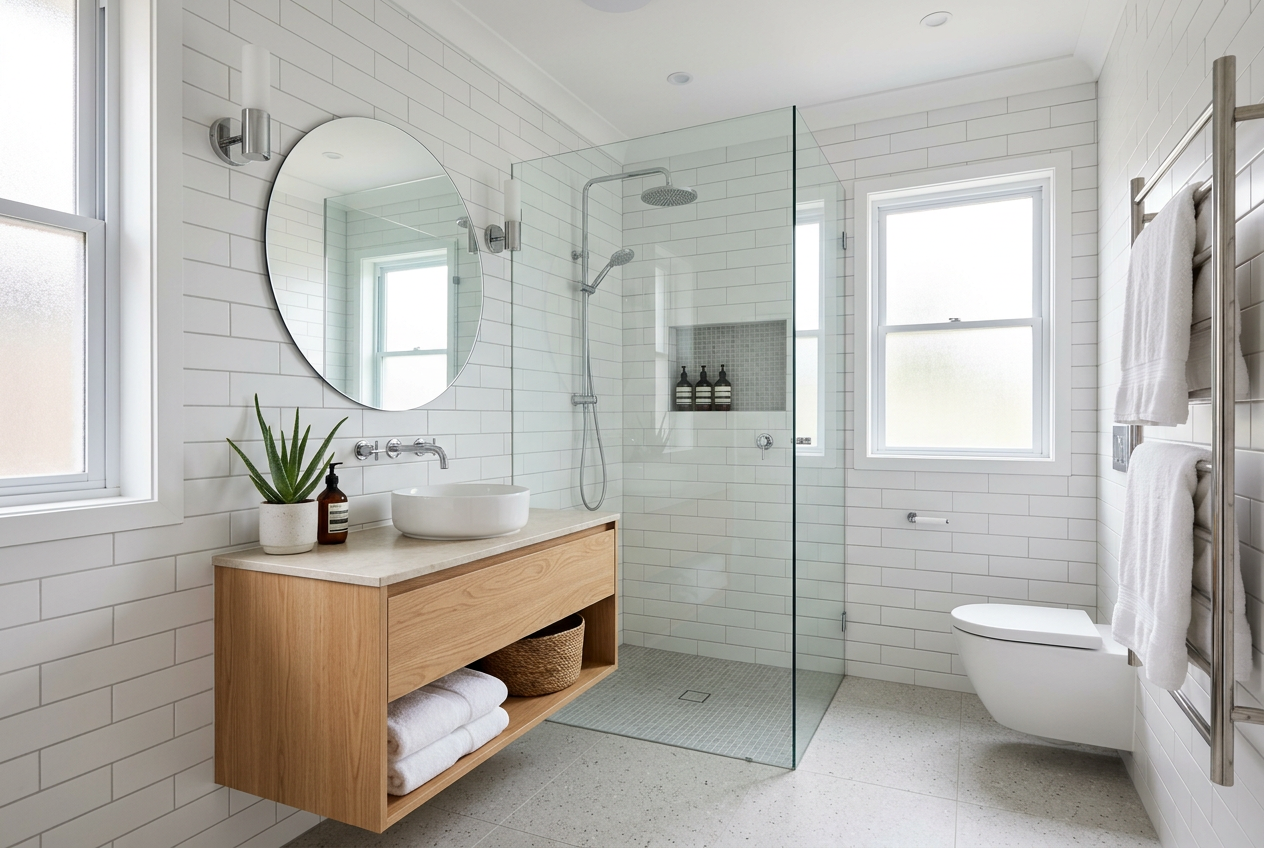
Consider a wall-hung vanity. Suspending the cabinet 150–200 mm off the floor creates visual floor depth, so even if the floor area hasn’t changed, the room still feels more open. Wall-hung vanities require solid wall framing behind them, so confirm the studs are in the right position before you purchase. In the 400–500 mm width range. Slimline vanities are another option.
A corner vanity unit is also worth considering. It occupies an otherwise awkward and underused floor section without consuming the more accessible wall space in the room. Regarding cabinet construction, PVC offers better moisture resistance than MDF, which is not waterproof — an important distinction in a bathroom environment.
Most vanities are sold without a basin, mixer, and waste, so budget for these separately. All plumbing connections must be completed by a licensed plumber.