
For a long time, building a custom home felt like something reserved for people with unlimited budgets and unlimited patience. The perception was that the process was long, complicated, and inevitably more expensive than what was originally quoted. That perception kept a lot of Western New York families from ever seriously exploring what custom construction could actually offer them, and it led many of them toward production homes that checked most of their boxes but not all of them.
That picture has changed. The process of building custom homes in Buffalo NY has become considerably more accessible, more transparent, and more design-forward than it was even a decade ago. Better visualization technology, more flexible construction systems, and builders who approach the process as a genuine collaboration rather than a transaction have made custom homeownership a realistic path for families who previously assumed it was out of reach.
What has not changed is the fundamental case for building custom rather than buying existing. A home designed around your specific life, your lot, your priorities, and your aesthetic does things for you that no production home can replicate regardless of how many upgrades you select from the standard options list. Understanding what that case actually looks like in practical terms is the starting point for any family considering this path.
What Buffalo and Western New York Offer as a Place to Build
The Buffalo region is genuinely one of the more underrated places in the country to build a custom home, and the reasons go beyond the cost of land relative to coastal markets. Western New York offers a range of building sites that give custom home buyers real options about how and where they want to live. Suburban lots in communities like Amherst, Clarence, and Williamsville offer proximity to the city with more space than urban parcels. Rural and semi-rural properties in the Chautauqua region, the Finger Lakes, and Ellicottville offer views, privacy, and natural surroundings that define the character of the home as much as the architecture does.
The climate shapes custom home design in Buffalo in ways that production builders rarely address well. Significant snowfall, cold winters, and the distinct four-season character of the region create real design priorities around insulation performance, roof load capacity, window quality, and how the home connects to outdoor space across seasons. A custom home designed specifically for a Western New York site can address these priorities from the ground up rather than applying generic solutions that serve average conditions across many markets.
The regional economy has also been shifting in ways that make Buffalo an increasingly attractive place to put down roots. Growth in healthcare, technology, and other sectors has brought new residents and new investment to the region, and property values in desirable areas have responded accordingly. Building a well-designed custom home in this environment is both a lifestyle decision and a sound long-term investment in a market with genuine momentum.
The Case for Post and Beam Construction
Not all custom homes are built the same way, and the construction method chosen has lasting consequences for the character, durability, and performance of the finished home. Post and beam construction, which uses a structural framework of large timber members rather than conventional stud framing, produces homes with a fundamentally different architectural character and a set of practical advantages that matter over the life of the building.
The most immediately visible difference is spatial. Because the structural load in post and beam construction is carried by the timber frame rather than by the walls, interior floor plans are not constrained by load-bearing wall requirements in the same way that conventionally framed homes are. Open, light-filled spaces with dramatic ceiling heights and clear spans between structural members are natural expressions of the post and beam system rather than expensive design exceptions that require structural engineering workarounds.
The exposed timber structure itself becomes an architectural feature that gives post and beam homes a warmth and visual character that is genuinely difficult to replicate with other construction methods. The grain and natural variation of structural timber used as a finished interior element creates a quality of space that feels both substantial and connected to natural materials in a way that drywall and conventional framing do not approach.
From a durability standpoint, properly constructed post and beam homes perform exceptionally well over time. Large timber members have dimensional stability that engineered lumber and light framing do not match, and the structural integrity of a well-built timber frame is not easily compromised by the kinds of minor damage and deterioration that affect conventional construction over decades of use.
How the Custom Home Design Process Actually Works
The design process for a custom home is the part that most families find unfamiliar, and it is also where the quality of the builder relationship matters most. A collaborative design process that brings the homeowner into genuine participation at each stage produces a result that reflects the family’s actual priorities rather than the builder’s default preferences.
The process typically begins with an honest conversation about how the family lives, what the existing home does not do well, what aspects of daily life they want the new home to support, and how the property itself shapes what is possible. Site characteristics including orientation, topography, views, and access all inform design decisions that affect how the home will actually function and feel throughout the year.
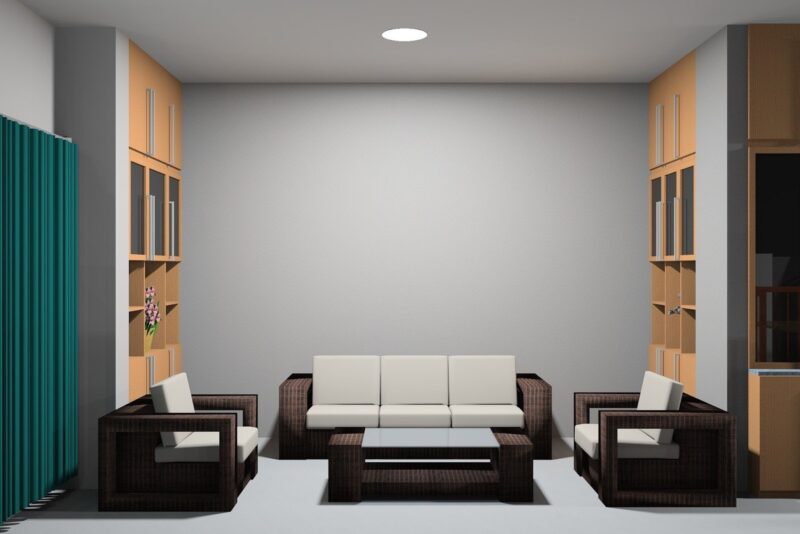
From that foundation, the design develops through a series of increasingly detailed iterations. Modern visualization tools including three-dimensional renderings and virtual reality walkthroughs allow homeowners to experience the proposed design in a way that two-dimensional floor plans never provided. Seeing how natural light moves through a proposed great room at different times of day, understanding how the kitchen and living areas relate to each other in actual three-dimensional space, and experiencing the scale of rooms before they are built allows families to make informed decisions about the design rather than discovering after construction that something does not work as they imagined.
Building on Your Own Land
One of the most compelling aspects of custom home construction in Western New York is the option to build on land the buyer already owns or is in the process of acquiring. For families with a specific site in mind, whether a rural acreage, a lot in an established neighborhood, or a property that has been in the family for years, custom construction is the only path to a home that truly belongs to that specific place.
Designing a home for a particular site means that the orientation, the relationship to views, the approach from the road, the connection between indoor and outdoor spaces, and the way the home sits within its surroundings can all be considered as part of the design rather than treated as fixed conditions that the buyer simply accepts. A home that is designed for its site rather than placed on it feels different in a way that is hard to articulate but immediately apparent to anyone who has experienced both.
The practical considerations of building on a specific site, including soil conditions, utility connections, driveway access, and any regulatory constraints on the property, are all part of the early planning work that a qualified builder handles as part of the project. Understanding those site conditions before finalizing a design prevents costly surprises during construction and ensures that the finished home actually works on the land it was designed for.