When it comes to designing a gorgeous outdoor living space, you’re probably focusing on choosing the best outdoor furniture, grill, appliances, and décor elements.
But we’ve got news for you…
Outdoor area rugs are one of the most neglected (but crucial) pieces of any exterior design. Not only do they set the stage for a fabulous patio or deck look but can also make or break the style of any outdoor space.
In fact, without them, all of the other elements are just kind of… floating there. And, here’s the kicker…
Outdoor rugs are…
- Easy to install
- Inexpensive compared to other upgrades
- Instant transformation of any outdoor space looks and feels
What you’ll discover:
- Why Outdoor Area Rugs Matter
- How To Choose The Right Rug Size
- Placement Strategies That Work
- Materials That Survive The Elements
Why Outdoor Area Rugs Matter
Outdoor rugs do a lot more than just being decorative. They can create zones and add comfort underfoot while bringing together furniture groupings in a way nothing else can.
It’s like this…
You wouldn’t go into your home and not have any flooring in your living room. It just wouldn’t look finished. In the same way, a patio without an outdoor rug just doesn’t feel right.
The right rug anchors down furniture pieces, creates visual lines, and makes the space feel purposeful rather than just thrown together.
But most homeowners don’t realize this…
Outdoor area rugs were purchased by 19% of renovating homeowners as part of their outdoor upgrades according to Houzz. This proves just how important rugs have become for outdoor living spaces.
An outdoor rug is one of the easiest and most cost-effective ways to upgrade your outdoor space.
In fact, data shows that 98% of experts agree an updated outdoor space has a significant impact on home value.
Pretty cool, right?
How To Choose The Right Rug Size
Choosing the right rug size is one area where most homeowners go wrong. Too small, and it ends up looking like an afterthought. Too big, and it overpowers the space.
But don’t worry… We’ve got a simple rule of thumb to follow.
For dining areas: Extend the rug at least 24 inches from the table on all sides. So when the chairs are pulled out, they stay on the rug.
For seating areas: All front legs of the sofas and chairs should rest on the rug. This creates a polished and pulled together look without a “floating furniture” effect.
For small patios or balconies: Use a 5×7 or 6×9 rug. They’re typically the perfect size for making an impact without taking up too much square footage.
The most common sizes for outdoor rugs are:
- 5×7 feet (small seating area)
- 6×9 feet (great for average patios)
- 8×10 feet (nice for larger dining setups)
- 9×12 feet (best for larger outdoor rooms)
But, before buying, measure the space and use painter’s tape to map out the area rug size you’re thinking of first.
Placement Strategies That Work
Ok, to placement. Getting the rug placement right can really take an ordinary patio from “blah” to “wow”.
Dining zone: Center the rug under the table with equal distance on all sides. Make sure the legs of furniture all remain on the rug when guests are seated.
Lounge area: Position so at least the front legs of all seating pieces rest on the rug. If the space is a sectional, the entire piece should sit on the rug if possible.
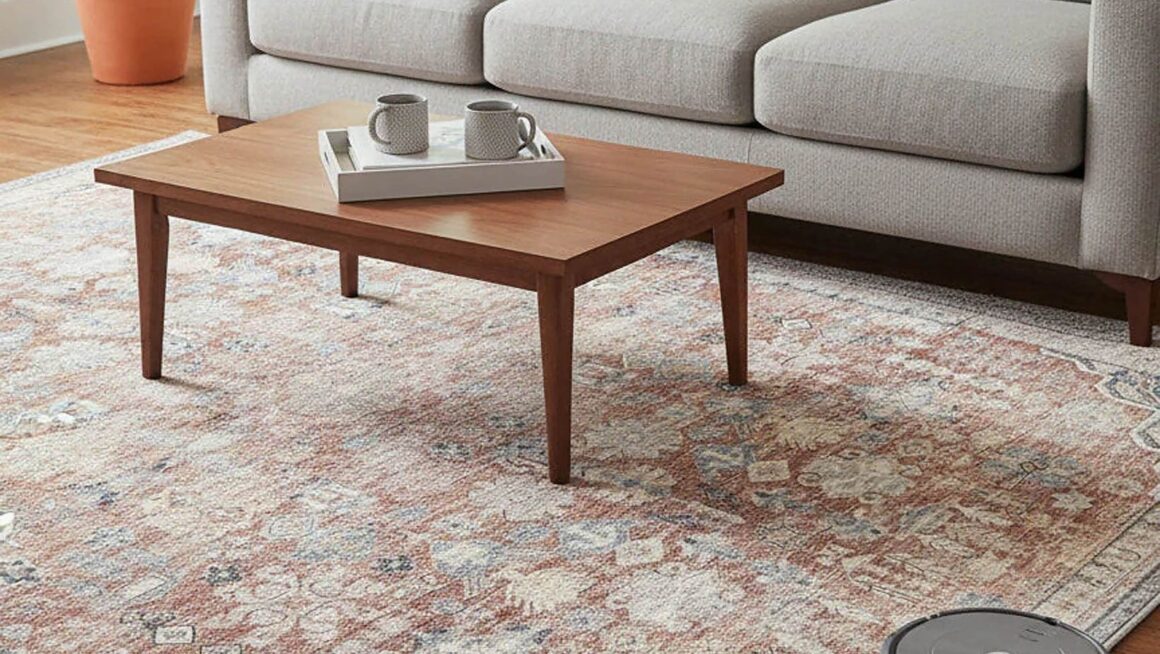
Layered: Smaller accent rugs layered on top of a larger base rug add interest. Plus, if a smaller rug gets damaged or worn, it’s easier to replace than a huge outdoor rug.
Also, most people forget this one little thing…
Outdoor area rugs should never go right up to the edge of a deck or patio. Leave a border of flooring around all sides of the rug to frame it and create definition. This looks intentional rather than accidental.
Placement also depends on the shape of your space. Rectangular rugs are better for traditional rectangular patios. Round or oval rugs are great for softening angular spaces or under round dining tables.
Materials That Survive The Elements
Now we’re talking about what makes a rug truly fit for outdoor use.
The material is way more important than just the size or style. A rug that can’t handle sun, rain, and heavy foot traffic will fall apart within months.
Polypropylene: This synthetic fiber is the standard for outdoor rugs. It resists moisture, mildew, and fading from UV rays while being incredibly easy to hose down clean.
Polyester: Another excellent option that provides stain resistance and color retention. Slightly softer underfoot than polypropylene but just as durable.
Natural fibers (jute, sisal): Great for covered patios only. Adds a nice organic look but cannot stand up to moisture or direct sun for long periods.
But, did you know this little fact that most retailers won’t tell you?
Not all outdoor rugs are made equal. Be sure to look for rugs specifically designed for outdoor use with UV-resistant fibers and proper drainage backing. Indoor rugs placed outside will deteriorate quickly and become a slip hazard when wet.
Maintenance Tips For Longevity
Ok, we’re gonna talk about maintenance now.
Regular maintenance is key to the long life of any outdoor area rug. The good news is that it doesn’t take much effort.
- Shake out debris once a week to keep dirt from settling in
- Hose down every month or after heavy use
- Flip and rotate quarterly to encourage even wear
- Store during extreme winter weather if possible
Even the best outdoor materials can get mildewy or moldy if airflow can’t get to the underside. Using an outdoor rug pad allows the moisture to escape while providing slip resistance on the floor.
Common Mistakes To Avoid
Ok, here’s something else you should know that most people don’t.
Most homeowners make the same mistakes that can sink their efforts when designing the perfect outdoor space.
- Choosing a rug that’s too small. When in doubt, size up.
- Ignoring the size of the furniture. The rug should relate to furniture size, not just floor space.
- Not thinking about foot traffic. Rugs should not block paths or create tripping hazards.
- Opting for style over function. That gorgeous indoor rug will turn to dust outside within weeks.
Wrapping It Up
Outdoor area rugs are one of the simplest ways to take any patio, deck, or balcony and turn it into a true outdoor living space. They anchor furniture, create zones, and provide comfort not found on a hard floor.
The key takeaways are:
- Measure first and size up when in doubt
- Place the rug so all furniture legs stay on the rug
- Pick weather-resistant material like polypropylene
- Clean and maintain regularly to extend life
- Avoid common size and placement mistakes
The right outdoor rug turns a drab patio into an extension of the home. Proper size, placement, and materials make any outdoor space look intentional and welcoming for years to come.