
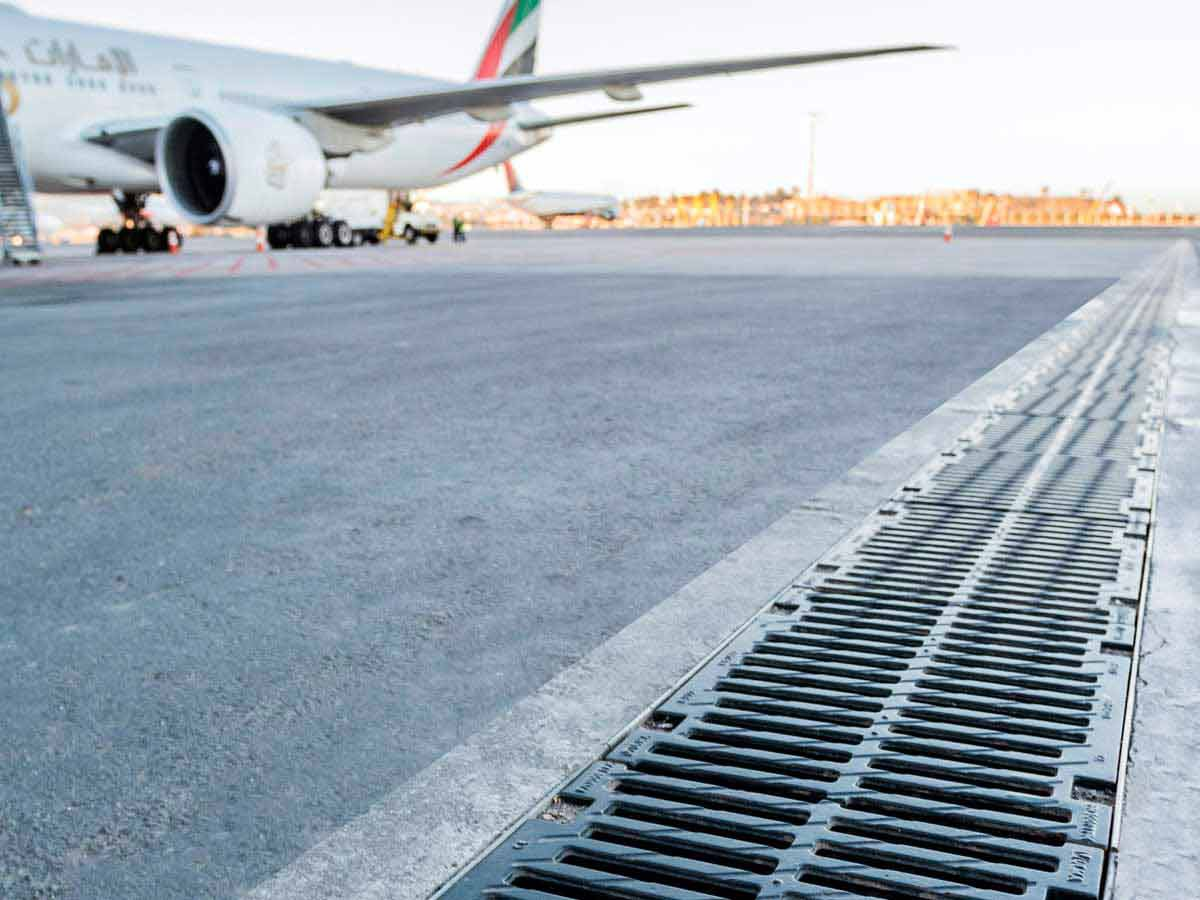
An inefficient drainage channel can compromise aircraft braking, alter operating times, and affect pavement integrity. Therefore, heavy-duty drainage systems are not conceived as simple gutters, but as precision hydraulic engineering solutions that are durable under constant dynamic loads.
Modern airport infrastructure requires controlled slopes, aesthetic integration with the environment, and materials capable of withstanding the continuous flow of commercial and cargo aircraft. In this context, drainage ceases to be a secondary element and becomes a strategic component of the architectural and operational design within airports.
Specific Drainage Challenges in Airport Environments
Drainage at an airport does not face the same challenges as it does on a highway or in an industrial area. In this type of infrastructure, scale and resilience define the success of the system.
Each runway, taxiway, or parking apron is exposed to extreme loads, thermal variations, and water flows that must be evacuated with millimeter accuracy.
1. Precise Surface Water Management
At airports, even the smallest accumulation of water can compromise aircraft braking and safety. Therefore, airport drainage channels must evacuate large volumes in a short time, with slopes and intakes designed with hydraulic precision.
2. Structural Strength Under Extreme Loads
Runways and aprons support tons of aircraft weight. Drainage systems must withstand these dynamic loads without deforming, using high-strength materials such as polymer concrete or nodular cast iron.
3. Durability Against Chemical Agents and Thermal Variations
Constant contact with fuels, oils, and de-icing products requires heavy-duty drainage channels made of stable, corrosion-resistant materials, ensuring a long service life.
4. Rapid Maintenance Without Affecting Operations
An airport cannot be stopped. Therefore, systems must allow for rapid cleaning and inspections, with easily accessible modules that reduce intervention times and keep the runway operational.
5. Aesthetic and Functional Integration
Airport drainage must also respect the architectural aesthetics of the surroundings. Channels must be integrated into pavements and structures without altering visual continuity or interfering with the spatial design.
Airport Design and Its Relationship to Precision Drainage
In airport infrastructure, drainage is not designed after the fact: it is planned from the very beginning. Each runway, apron, and taxiway depends on integrated hydraulic planning that ensures controlled water drainage without affecting the pavement structure.
Drainage channels at airports must be integrated into the architectural and structural design, ensuring that water flows without affecting the pavement or generating puddles. A single leveling error can compromise the safety of an aircraft during landing.
Furthermore, channels must be perfectly aligned with the pavement, without visible edges or irregularities that interfere with the movement of aircraft or service vehicles. A well-designed drainage system that manages water and protects the entire infrastructure is essential.
Extreme Loads and Structural Behavior of the Channel
At an airport, the taxiway surface is stretched to its limits. Each landing or maneuver generates pressures and vibrations that test not only the pavement but also the drainage system.
Aircraft loads easily exceed tens of tons, combined with the impact of braking, turbine thrust, and constant temperature changes due to engine reaction and sun exposure.
These extreme conditions require airport drainage channels to have a structure capable of absorbing weight, vibration, and thermal expansion without deformation or displacement.
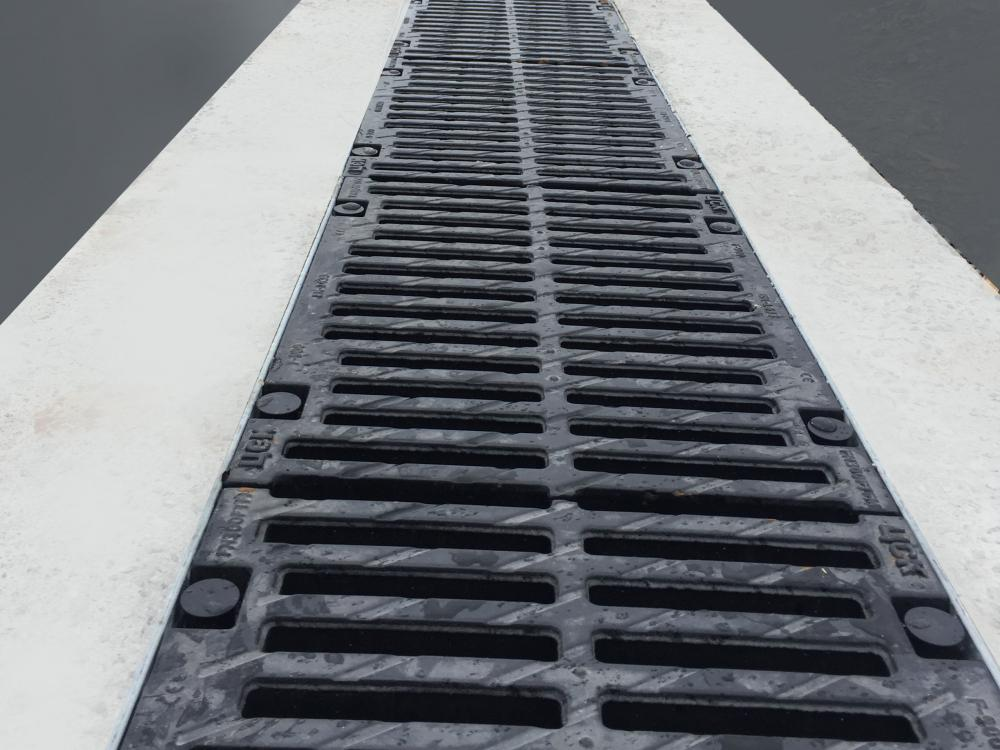
The most efficient systems use ultra-heavy-duty channels combined with galvanized steel or nodular cast iron gratings, materials that guarantee high impact absorption capacity and a long service life. Therefore, specialized manufacturers prioritize certified structural strength, tolerance control, and material compatibility, ensuring robust and long-lasting drainage to meet the unique demands of airport infrastructure.
Integration with Airport Operations
The most commonly used channel types at airports vary depending on their location. Ultra-heavy-duty systems predominate on runways and aprons, designed to withstand the constant flow of aircraft and service vehicles.
This integration requires collaborative planning between engineers, architects, and manufacturers, where every decision reflects a balance between safety, performance, and aesthetics. ULMA Architectural Solutions provide a unique value through technical precision and a clean visual finish, tailored to the demands of each project.
Furthermore, modern airports prioritize low-maintenance drainage solutions that can withstand the test of time without deterioration or obstruction. Modular, affordable systems using durable materials reduce intervention times and operating costs, ensuring continuity even in highly demanding environments.
Each airport project poses unique challenges, but the important thing is that it meets its primary needs: drainage, resilience, and harmonization.